
How to Write a Measurable IEP Goal With a Baseline, Criterion, and Timeline
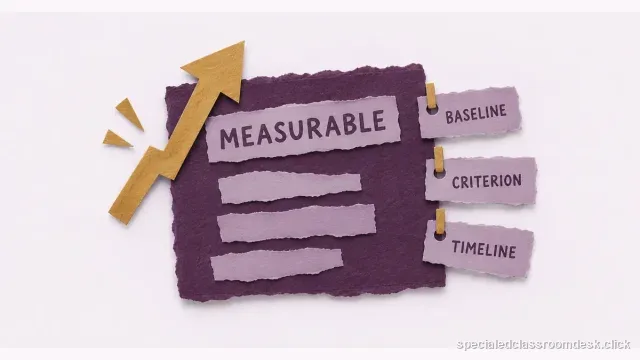
Build an annual IEP goal from baseline data, a clearly observable skill, a measurement method, a success criterion, and an explicit timeline.
Every guide is linked in the server-rendered HTML so teachers and search engines can reach the full library without client-side filtering.
Build an annual IEP goal from baseline data, a clearly observable skill, a measurement method, a success criterion, and an explicit timeline.
Turn oral-reading data into a fluency goal that separates rate from accuracy, defines passage difficulty, and produces data teachers can interpret.
Write a computation goal that identifies the exact operation, problem type, permitted supports, probe size, scoring rule, and meaningful mastery criterion.
Build a written-expression goal around a defined prompt, writing sample, analytic rubric, baseline profile, and criterion that shows real growth over time.
Make a following-directions goal measurable by defining step length, response window, prompt level, settings, data opportunities, and independence.
Write a social-skills goal around a specific interaction, natural opportunities, prompt level, generalization, and an observable replacement response.
Turn self-regulation into observable data by defining triggers, taught strategies, prompt levels, duration, and a realistic return-to-learning outcome.
Diagnose vague IEP goal wording and repair missing baselines, unclear behaviors, undefined prompts, weak measurement rules, and accidental mastery.
Match the progress-monitoring tool to the exact IEP construct, sensitivity needed, scoring reliability, collection burden, and decisions the team must make.
Choose an IEP progress-monitoring frequency based on skill sensitivity, opportunity rate, intervention intensity, decision deadlines, and staff burden.
Read level, trend, variability, outliers, and intervention changes together so IEP progress data lead to a teaching decision instead of a rushed conclusion.
Use a stalled IEP goal to inspect measurement, attendance, instructional delivery, error patterns, supports, and whether the team needs to reconvene.
Distinguish accommodations from modifications by whether access changes or the learning expectation changes, with classroom examples and IEP cautions.
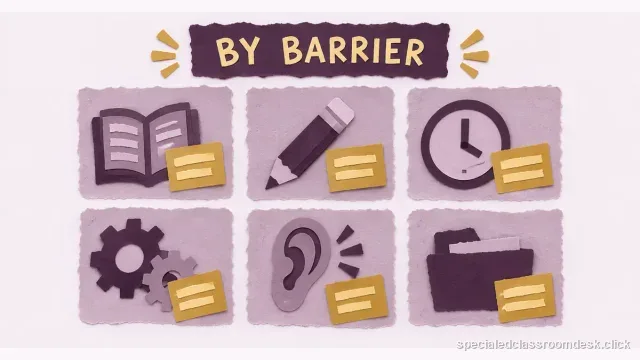
Choose classroom accommodations by the barrier they solve, with concrete implementation examples for reading, writing, attention, processing, and organization.
Place accommodations in the IEP so classroom, testing, service, frequency, location, and implementation details are clear enough for staff to follow.
Review all 13 IDEA disability categories, the special-education-need requirement, and why an eligibility label does not dictate services or placement.
Follow special education evaluation from referral question through consent, multiple data sources, team interpretation, eligibility, and educational need.
Understand IDEA’s reevaluation timing, the parent-and-agency exception, existing-data review, new assessment decisions, and what teachers should prepare.
Understand the IDEA independent educational evaluation rule, what the district must do after a request, and how classroom staff can contribute neutral data.
Convert assessment results, class performance, functional data, strengths, and disability impact into a PLAAFP that directly supports goals and services.
Write functional present levels with observable baselines for routines, communication, self-regulation, behavior, organization, mobility, and independence.
Plan IDEA transition services using age-appropriate assessment, measurable postsecondary goals, courses of study, student voice, and annual updates.
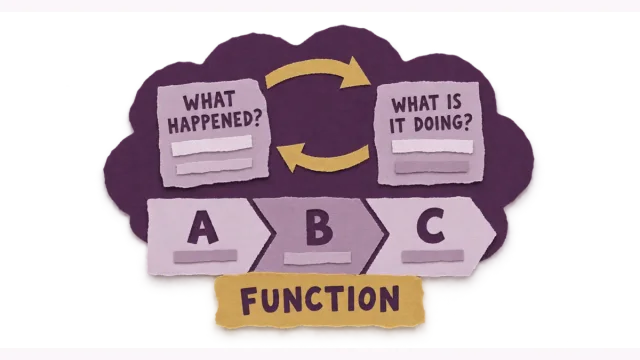
Use FBA basics to define behavior, collect ABC and contextual data, test a function hypothesis, and connect findings to prevention and replacement skills.
Build a practical BIP from an FBA by defining prevention, replacement skills, reinforcement, adult responses, safety steps, data, and fidelity checks.
Understand IDEA least restrictive environment, supplementary aids, regular-class removal, and the placement continuum without treating placement as fixed.
Map the traditional special-education licensure route from approved preparation and clinical practice to testing, application, background checks, and hiring.
Compare alternative special-education certification programs by state approval, internship authorization, supervision, testing, cost, timeline, and exit rules.
Vet a special-education licensure program for state approval, credential scope, clinical placements, portability, support, total cost, and completion outcomes.
Plan an added special-education endorsement by checking assignment scope, approved routes, coursework or exams, state application steps, and transfer timing.
Turn a state add-on requirement page into a course-and-exam plan, identify gaps from your gen-ed license, and avoid taking classes that do not count.
Before an internal transfer to special education, verify credential scope, temporary authorization, case-management duties, mentoring, and issuance timing.
Renew a special-education credential by verifying the state cycle, approved learning, documentation, application timing, fees, and any area-specific conditions.
Sort PD, college credit, district in-service, conferences, mentoring, and online courses by your state’s acceptance and documentation rules before renewal.
Handle an expired special-education credential by confirming status, contacting district HR, and following current state late-renewal or reinstatement rules.
Move a special-education credential across state lines by checking the receiving state, authorization match, transcripts, testing, experience, and deadlines.
Understand what NASDTEC reciprocity can simplify for a special-education teacher, what the receiving state still controls, and what to verify first.
Resolve a special-education credential mismatch when a new state uses different grade bands, disability areas, or endorsement names from your current license.
Decode steps, lanes, contract days, degree credits, and special-ed pay tables so you can compare a district offer with the salary you are likely to receive.
Sort special-ed stipends, hard-to-staff differentials, extended-year pay, and one-time incentives so you know which extra compensation is recurring.
Understand how teacher retirement systems use service credit, vesting, final compensation, and retirement age—and why you must check your own state plan.
Evaluate a teacher service-credit purchase by verifying eligibility, cost, benefit impact, deadlines, and whether the same service is credited elsewhere.
Review vesting status, contribution refunds, future pension rights, service restoration, and Social Security before leaving a public-school retirement system.
Turn special-ed caseload overload into documented workload evidence using service minutes, IEP deadlines, scheduling conflicts, and concrete support requests.
Use a decision framework for special-ed burnout that separates fixable workload problems from leave, transfer, resignation, licensure, and pension consequences.
Plan a midcareer move from general education into special education by mapping endorsement requirements, case-management work, IEP practice, and assignment fit.