Behavior Intervention Plan Basics: Turn an FBA Hypothesis Into Prevention, Teaching, and Response Steps
Build a practical BIP from an FBA by defining prevention, replacement skills, reinforcement, adult responses, safety steps, data, and fidelity checks.

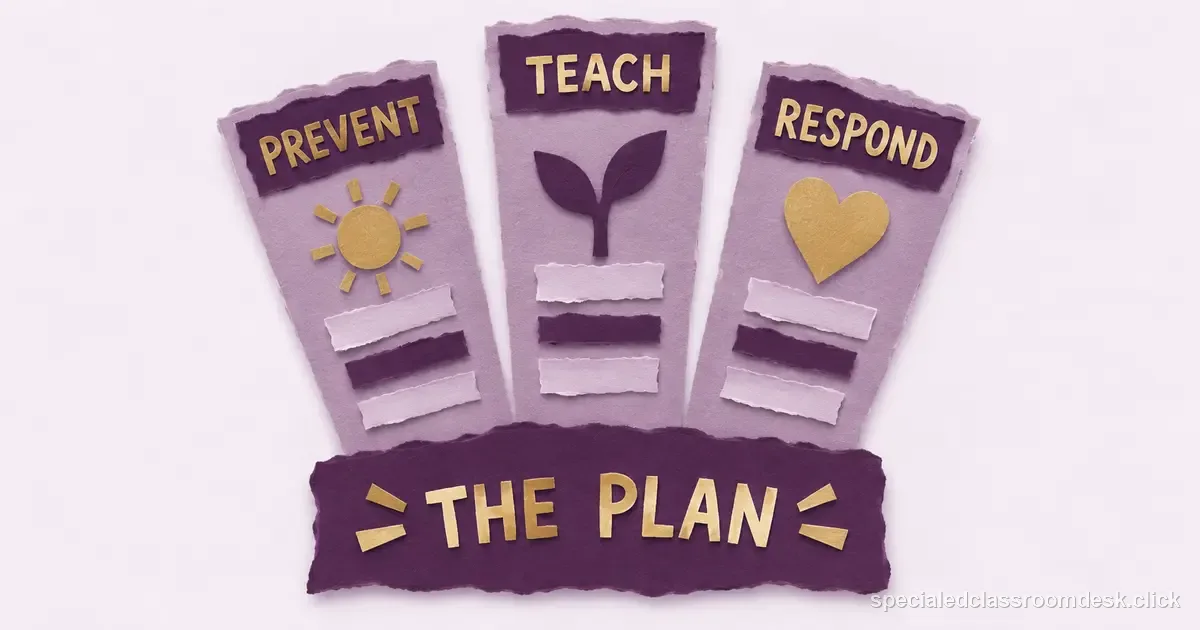
A behavior intervention plan is useful only if a teacher can tell what to do before, during, and after the target behavior. The plan should flow from functional assessment. If the FBA suggests behavior helps a student escape a high-effort task, a BIP built around earning stickers for “good behavior” may miss the mechanism entirely.
Put the behavior definition at the top
Staff need one shared definition. Include the target behavior, examples, nonexamples, and the measurement dimension. For leaving area, define the boundary and legitimate exceptions. For verbal aggression, specify which statements count rather than scoring any disagreement as aggression.
State the function hypothesis in testable language
Example: “When lengthy independent handwriting is assigned, Jordan is more likely to tear materials or put his head down; these responses are often followed by delayed or removed writing. The team hypothesizes that the behavior is maintained primarily by escape from high-effort handwriting.” A testable statement connects antecedent, behavior, and outcome.

Design prevention around the predictable conditions
If handwriting load is a trigger, prevention might include reduced copying, keyboard access for content tasks, shorter chunks, a visual completion marker, and choice of which item to start first. Prevention should preserve the educational purpose while removing unnecessary barriers. It is different from allowing the student to avoid all writing indefinitely.
Teach the replacement before expecting it under stress
Choose a response that is easy, efficient, and accepted by adults: show a break card, say “help with first one,” request keyboard use, or ask for a two-minute pause. Practice during neutral times. Prompt the replacement early in the escalation chain, then fade prompts as the student succeeds.
Make the replacement response work
If an appropriate break request is ignored while tearing paper reliably removes the task, the environment teaches the student which behavior is effective. The BIP should specify how adults respond to the replacement behavior and how work is resumed or adjusted after the break. Reinforcement must compete with the outcome previously obtained by the problem behavior.
Write adult response steps that are short enough to follow
During escalation, a six-paragraph protocol is rarely usable. Example: keep language brief; reduce audience; offer the taught help/break cue; follow the safety plan if risk criteria are met; after regulation, return using the planned shortened first step. Avoid adding improvised lectures or negotiation if those responses are not part of the plan.
- Before the behaviorAdjust predictable barriers and make communication tools available.
- Teach the replacementPractice an easy response during neutral moments.
- When escalation startsUse the brief adult response and approved safety process.
- After the responseResume or adjust work as planned.
- ReviewTrack both target behavior and replacement-skill use.
Separate crisis or safety procedures from everyday intervention
If behavior can create immediate danger, the district may require a separate crisis or safety plan consistent with state law, district policy, and staff training. Do not insert restraint or seclusion procedures from memory. Those areas are heavily governed and vary by jurisdiction. The BIP should identify how staff access the approved safety process without inventing unauthorized techniques.
Collect data on both the target behavior and the new skill
A decrease in disruption matters, but the plan should also show whether the student is learning the replacement. Track, for example, task-tearing frequency, independent help requests, break requests, and successful task return. If target behavior falls only because all difficult work disappeared, the student may not have gained a durable skill.
Add a fidelity check before declaring the plan ineffective
Use a small checklist: preventive support available, task chunking used, replacement prompt offered at the planned point, request honored according to plan, data recorded. If staff implementation is 40%, a flat student trend does not yet test the BIP fairly. Fidelity data are not for blaming staff; they identify training, schedule, or plan-design problems.
Set a review trigger
Do not wait automatically for the annual IEP. Review after a defined data period or sooner if behavior intensifies, safety changes, the function hypothesis appears wrong, or the replacement is not usable. A BIP is a working hypothesis translated into support. When the evidence contradicts it, the team should revise the plan rather than insist the student conform to a failed design.
If preventive supports or replacement prompts were not delivered as planned, a flat student trend does not yet show that the BIP hypothesis failed.
Write the replacement behavior at the same functional level
If behavior reliably produces escape from overwhelming work, teaching “use kind words” does not replace the function. A closer replacement might be requesting a brief break, asking for a smaller task chunk, or signaling that help is needed. The plan should specify how adults respond so the appropriate communication works faster and more predictably than the problem behavior.
Then define the response to escalation. Staff should know which steps protect safety, which demands are paused, how reinforcement is handled, and how the student re-enters instruction. Vague directions such as “redirect as needed” invite inconsistent adult behavior that can make the pattern harder to understand.
Measure fidelity alongside student outcomes. If the plan says staff offer a choice before independent work but that step happened on only two of ten observed days, poor results do not yet show that the intervention theory failed.
Check fidelity in the order staff use the plan
A fidelity record asks whether essential steps were available, not whether staff agree with the plan. For one routine, list prevention, teaching of the replacement skill, reinforcement, and the response if target behavior occurs. Mark “not applicable” when the opportunity did not occur and note why. That avoids treating every day as a student test or blaming staff for a step they could not deliver.
| Plan part | Evidence | Review question |
|---|---|---|
| Prevention | Was the task or setting adjustment ready? | Did the identified trigger change? |
| Teaching | Was the replacement response modeled and practiced? | Could the student use it here? |
| Response | Did staff follow the safe agreed sequence? | Did it support re-entry to learning? |
This is a team aid, not a replacement for the individualized plan, staff training, crisis procedures, or district rules. Safety emergencies follow local protocols.
When data do not improve, check whether the plan was used as written before declaring the intervention ineffective. Review a small sample of routines across staff and settings; identify whether prevention, replacement-skill teaching, reinforcement, and response steps were present. Then compare the hypothesized function with what was observed, noting changes in task demand, communication access, or setting. Bring the pattern back to the team responsible for the plan. Staff should not independently add restrictive consequences, physical procedures, or crisis steps absent the required plan and training.
Sources checked
Questions teachers ask
Does a BIP have to come from an FBA?
A function-based BIP is strongest when it is grounded in assessment of why the behavior occurs. Follow district and state procedures for formal FBA/BIP requirements.
Should the BIP only track the problem behavior?
No. Track the replacement behavior and relevant outcomes too, such as successful task return or independent communication, so the team can see whether a new skill is developing.
What if staff are not implementing the plan consistently?
Use a brief fidelity check to identify where implementation breaks down. Training, materials, schedules, or an overly complicated plan may need correction before judging effectiveness.
Can a BIP include restraint procedures?
Safety practices are governed by state law, district policy, and staff training. Do not invent or copy crisis procedures into a plan; use the approved local process and trained personnel.