IDEA Transition Planning by Age 16: Build Postsecondary Goals From Assessments, Not Generic Checklists
Plan IDEA transition services using age-appropriate assessment, measurable postsecondary goals, courses of study, student voice, and annual updates.

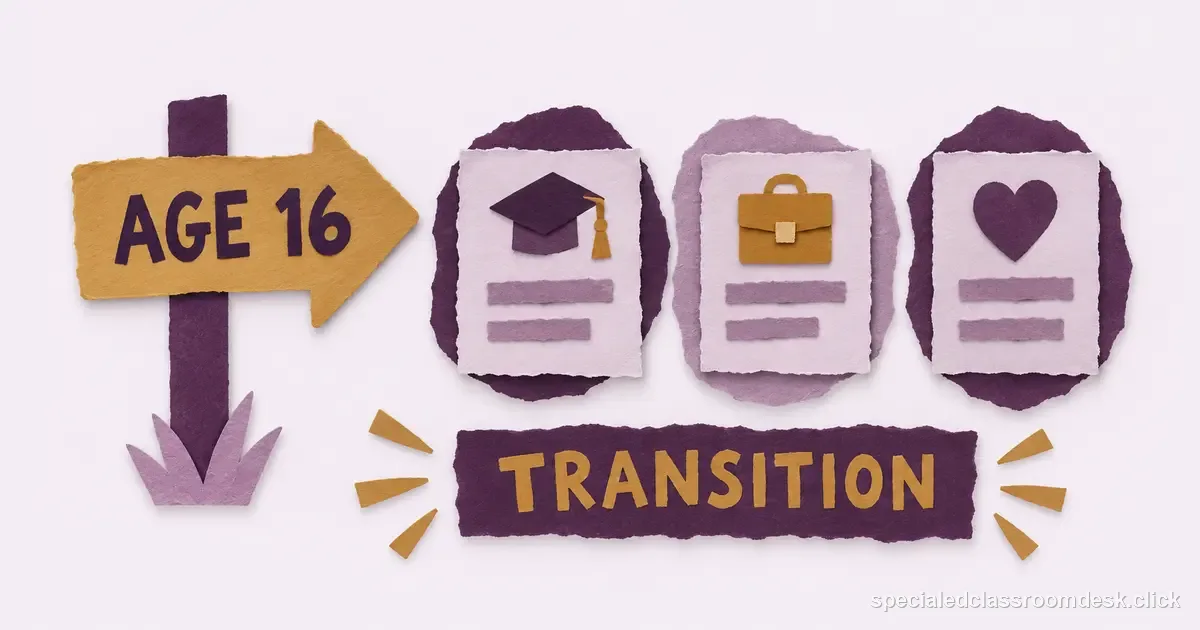
Under IDEA, transition planning must appear no later than the first IEP that will be in effect when the student turns 16, or younger if the IEP Team determines that appropriate, and it must be updated annually. Some states begin earlier, so case managers must check their state rules. The federal content is not a career-interest worksheet stapled to the IEP; it includes measurable postsecondary goals based on age-appropriate transition assessment and the transition services needed to help the student reach them.
Start with life after high school, not next semester
Postsecondary goals describe what the student intends to do after leaving secondary school in education or training, employment, and, when appropriate, independent living. “Will explore colleges” is an in-school activity, not a postsecondary outcome. “After graduation, Maya will enroll in a community-college veterinary technician program” is closer to a measurable education/training outcome because it names a post-school destination.
Use more than an interest inventory
Age-appropriate transition assessment can draw from student interviews, interest and preference inventories, academic and functional data, vocational experiences, situational assessments, adaptive information, travel skills, self-advocacy performance, family input, and other relevant sources. The mix should fit the student's goals. A student pursuing competitive employment may need work-based data; a student planning college may need information about academic readiness and disability self-advocacy.
Separate postsecondary goals from annual IEP goals
A postsecondary goal states the intended adult outcome. An annual IEP goal targets a disability-related skill the student can work on during the coming year. For example, a postsecondary employment goal may be “After high school, Darius will work in an integrated automotive service setting.” An annual goal could target independently following a multi-step work checklist or requesting clarification from a supervisor during school-based work experiences.
Courses of study should support the destination
IDEA explicitly includes courses of study within transition services. That means the team should check whether the student's planned classes align with the postsecondary direction and graduation requirements. If a student wants a technical program that expects certain math preparation, the course plan should not be disconnected from that goal. State graduation pathways and diploma requirements vary, so use current state and district information.
| Postsecondary goal | Annual IEP goal | |
|---|---|---|
| When it applies | After leaving secondary school | During the coming IEP year |
| What it describes | Adult outcome in education or training, employment, and independent living when appropriate | A disability-related skill to practice now |
| How they connect | Names the destination | Builds a skill that supports the destination |
Give the student a real role in the process
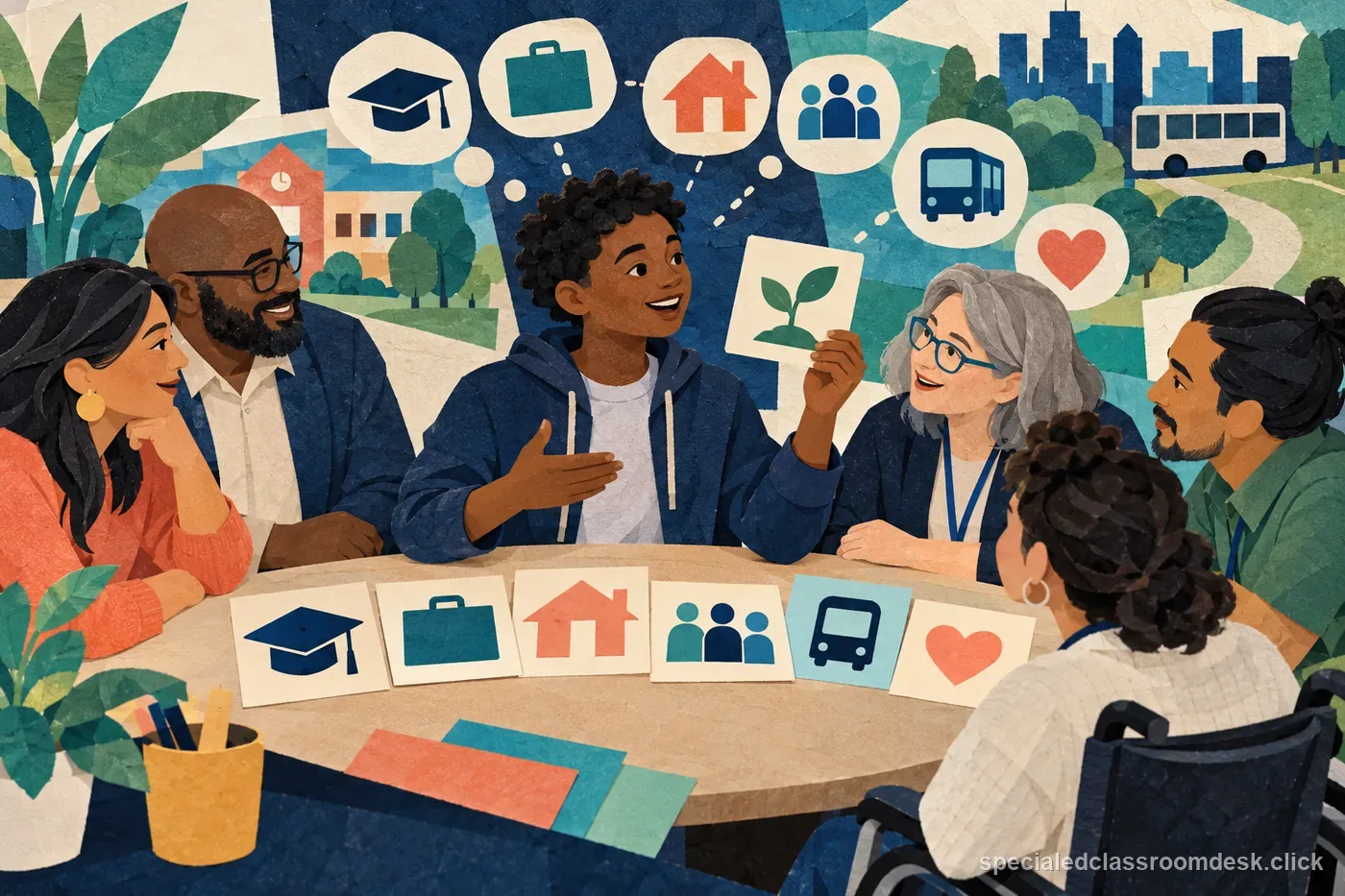
Transition planning is weak when adults choose a career for the student based on convenience or disability stereotype. Prepare students to describe strengths, preferences, support needs, and questions. Practice participating in the meeting, explaining accommodations, or leading one section if appropriate. Student voice is not a ceremonial invitation; it provides data about what goals are likely to matter enough to sustain effort.
Translate assessment findings into services and experiences
If a student wants restaurant work but situational assessment shows difficulty reading a visual schedule during rush periods, transition services might include explicit schedule-use instruction and a supported work experience. If a college-bound student cannot independently request accommodations, instruction may focus on disability knowledge, self-advocacy, email communication, and learning the differences between K–12 and postsecondary support systems.
Independent living is individualized, not automatic
IDEA says independent-living goals and assessment are included where appropriate. Do not add a generic cooking or budgeting goal to every transition-age IEP. Consider transportation, money management, health routines, community navigation, personal care, housing-related skills, or decision-making only when data show they are relevant to the student's postsecondary plan.
A compact transition chain
Assessment finding: Sofia wants office work, types accurately, and completes familiar filing tasks but does not ask for clarification when instructions are ambiguous. Postsecondary employment goal: After high school, Sofia will obtain paid employment in an integrated clerical or office-support setting. Annual skill target: During school-based work tasks, Sofia will identify an unclear direction and use a taught clarification request in 4 of 5 opportunities. Service/activity: job-shadow experiences plus explicit self-advocacy practice with unfamiliar supervisors.
Close the handoff to outside transition services
| Planning step | What the team records | Next check |
|---|---|---|
| Student's post-school direction | Education/training, employment, and independent-living outcome when appropriate, grounded in current assessment and student preferences | Does the student recognize this as their goal, and is the evidence recent? |
| Experience needed this school year | Coursework, work-based learning, travel practice, self-advocacy instruction, or another activity tied to the outcome | Who coordinates it, when will it happen, and what will count as participation or growth? |
| Agency handoff, if relevant | Potential participating agency and the transition service it may provide or fund | When appropriate, obtain parent consent or adult student's consent and invite the agency representative as IDEA §300.321(b)(3) requires. |
| Student cannot attend the meeting | How the team will gather and represent the student's preferences and interests | IDEA requires other steps to ensure those preferences and interests are considered. |
This handoff is not automatic agency enrollment or a guarantee that a particular agency will provide a service. The federal transition guide explains coordination across education and vocational rehabilitation; state agencies control their own eligibility and intake processes.
Update annually because plans should become more concrete
A sixteen-year-old's exploratory goal may legitimately change by age eighteen after courses, work experiences, and new preferences. Record the new assessment data and revise goals and services rather than preserving old wording for compliance. A changing plan can be evidence of good transition work when the change comes from better information.
Include independent-living outcomes when appropriate to the student’s postsecondary needs; do not add a generic goal to every transition plan.
Check the state rule before relying on age 16 alone
The federal deadline is a floor. States can require transition planning to begin earlier. Keep a state-specific case-management calendar and use the current state education agency guidance so the IEP is not late under a stricter local rule.
Turn one postsecondary goal into this year's IEP work
If a student wants competitive employment in automotive repair after high school, the annual IEP might address reading technical directions, workplace communication, travel training, or completing multi-step tasks with decreasing prompts. Transition planning is strongest when the postsecondary goal changes what the student practices now, not when it lives in a separate page of generic adult-life statements.
Check that the student helped shape the plan
Ask how the student prefers to participate: speaking, writing, using AAC, previewing questions, inviting a trusted adult, or sharing a response in another permitted way. Agency invitation and consent rules are separate and must follow local procedure. If the student does not attend, record how preferences and interests were considered instead of filling gaps with adult assumptions.
Translate one priority into a dated action, owner, setting, and evidence of completion. A goal about automotive employment might lead to a supported job-site visit, self-advocacy practice, or a visual work sequence. Connect activities to assessment and the student’s postsecondary goal. State requirements can start before age 16, so verify local rules early.
Sources checked
- IDEA §300.320(b) — Transition services in the IEP
- IDEA §300.321(b) — Transition-service participants and agency invitations
- U.S. Department of Education — Coordinating Transition Services and Postsecondary Access (2025)
- Vanderbilt IRIS Center — Transition Planning
- Kentucky Department of Education — Transition Resources
- Center for Parent Information and Resources — Contents of the IEP
Questions teachers ask
Does IDEA transition planning always start at age 16?
Federal IDEA requires transition content no later than the first IEP in effect when the student turns 16, or younger if the team decides. Some states require an earlier start.
Is a career-interest inventory enough for transition assessment?
Usually not by itself. Age-appropriate transition assessment should gather the information needed to plan education or training, employment, and independent living when appropriate.
What is the difference between a postsecondary goal and an annual IEP goal?
A postsecondary goal describes an outcome after high school; an annual IEP goal targets a disability-related skill the student will work on during the IEP year.
Does every student need an independent-living postsecondary goal?
IDEA includes independent-living goals where appropriate. The team should base that decision on assessment and the student's individual postsecondary needs.